Blue Starr Oyster Co. is excited to be working with UAF Graduate student, Sara Ebersole, to conduct critical research for the Alaska oyster farming sector, which is growing rapidly but still faces challenges to farming efficiency. A significant question in the sector that can influence both survival and profitability is: What is the best seed size to transfer from the nursery to the farm? The De-Risking Investments in Aquatic Farming: Seed Size Project was developed to address this question by evaluating how oyster seed size affects growth and survival under Alaska’s unique environmental conditions. The results of this research will be useful to our operations at Blue Starr as we decide the cost-benefit of purchasing larger seed. Sara is conducting this research as part of her M.Sc. in Marine Biology, with support from the UAS Sitka Mariculture Program. Read on for a detailed description of her ongoing research!
—
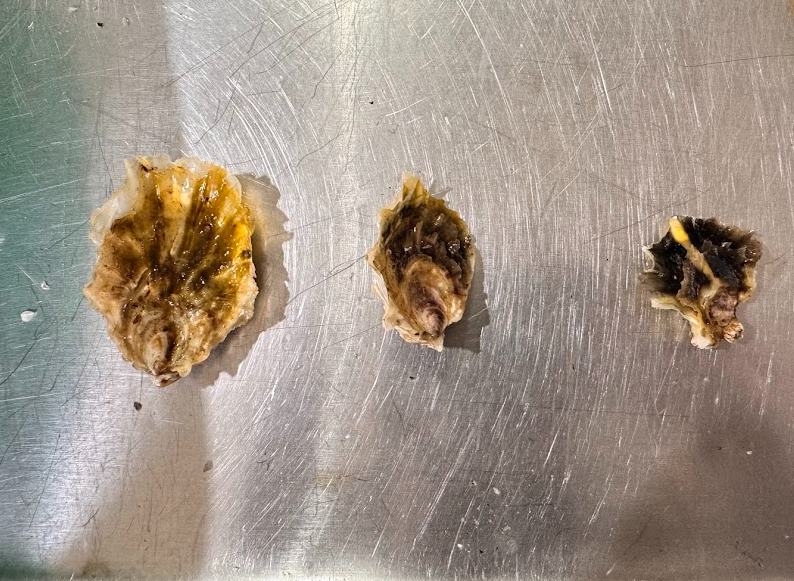
While the industry standard for oyster seed transfer is approximately 12 mm, there is increasing interest in whether larger seed may perform better in Alaska’s cold, highly seasonal waters. This project tests three seed sizes—9 mm, 12 mm, and 16 mm—across three commercial farm sites: Moss Island in Homer, Merrick Shellfish in Sitka, and Blue Starr Oyster Company on Prince of Wales Island. At each location, oysters were deployed in floating gear systems using a standardized design that includes 200 oysters per basket, six replicate baskets per size class, and a total of 18 baskets per site. This structure allows for direct comparison of performance across sites and seed sizes under real farming conditions.
The project began with foundational work between late 2024 and early 2025, including gear procurement, coordination with farmers, and deployment planning. By early summer 2025, oysters were successfully deployed at participating sites, and baseline data collection began. Throughout the summer and early fall, the project team conducted multiple sampling events, measuring shell length, width, and height, as well as whole wet weight, biomass, and stocking density. During each sampling event, 10 percent of oysters from each treatment group were removed for detailed measurement to ensure consistent and reliable data collection. Farmers played a key role in maintaining the experiment by conducting weekly cage flipping to reduce biofouling and support optimal growth conditions.
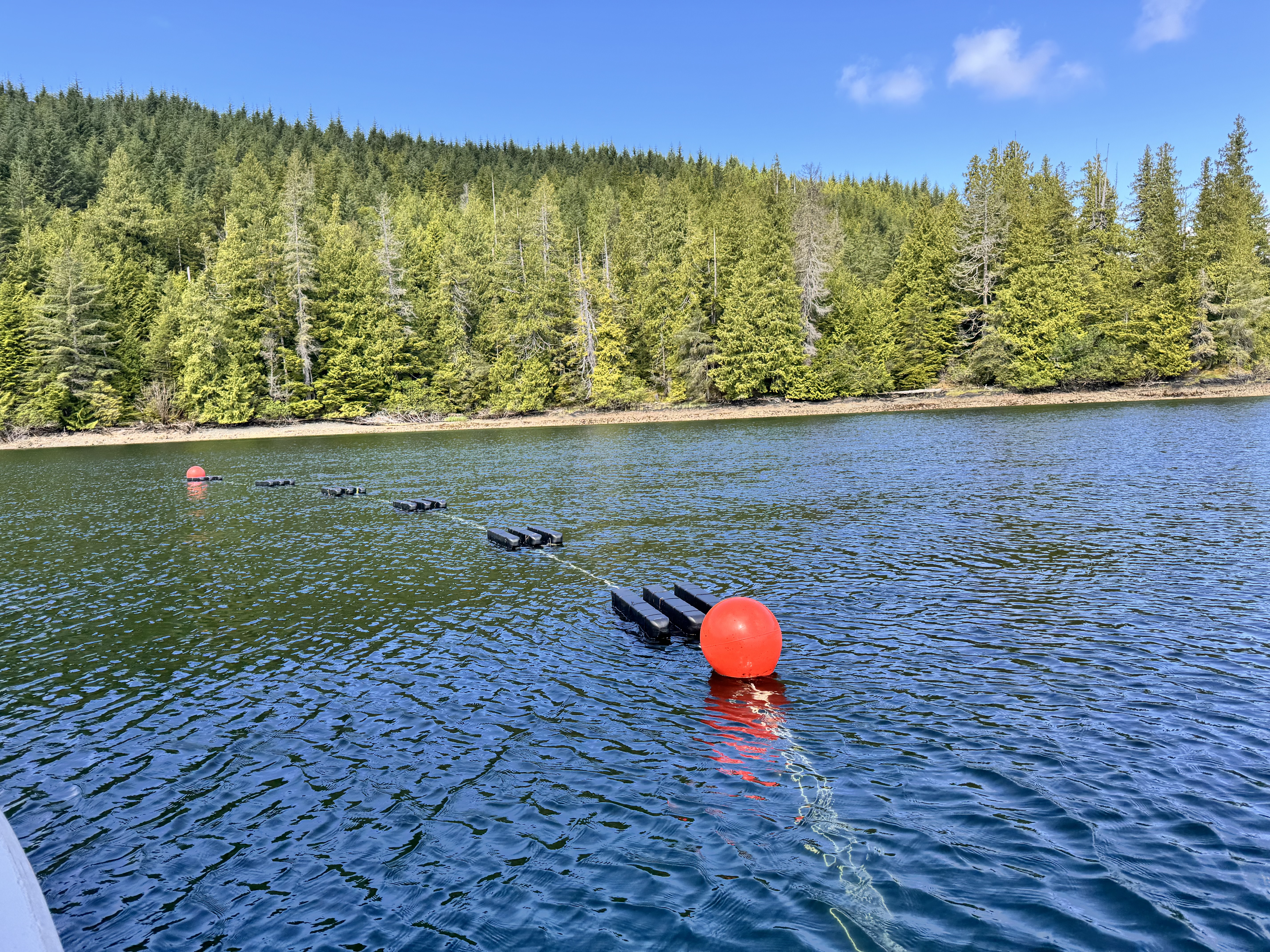
As the project progressed through the peak growing season, sampling was successfully completed across all three farm sites, and mortality remained low overall despite expected losses. This indicates strong early performance across treatments and suggests that all tested seed sizes are viable under current farm conditions. In late fall, routine cage flipping concluded as farms transitioned into winter operations, where activities are reduced due to weather and access limitations. Although environmental monitoring equipment was lost during a storm event at one site, replacement loggers were deployed quickly, ensuring continued collection of temperature, salinity, and dissolved oxygen data.
Preliminary observations suggest that differences in growth between seed sizes are beginning to emerge across sites, with larger seed potentially showing advantages under certain conditions. However, further analysis is needed to determine how these differences translate into meaningful outcomes for farmers, particularly when considering costs associated with purchasing larger seed. The project is designed not only to evaluate biological performance, but also to inform economic decision-making by integrating growth, survival, and seed cost into a comprehensive cost-benefit analysis.
Looking ahead, the next phase of the project will focus on winter survival and the ability of different seed sizes to capitalize on the spring phytoplankton bloom, which is a critical period for oyster growth in Alaska. Fieldwork is scheduled to resume in spring 2026, with additional sampling planned through the summer season. Final results will be shared through reports, conference presentations, and outreach efforts to ensure that findings are accessible to farmers, industry partners, and stakeholders.
By addressing a fundamental question in oyster farming—what size seed performs best under Alaska conditions—this project is helping to reduce uncertainty, improve farm efficiency, and support the long-term development of a resilient and sustainable mariculture industry in Alaska.
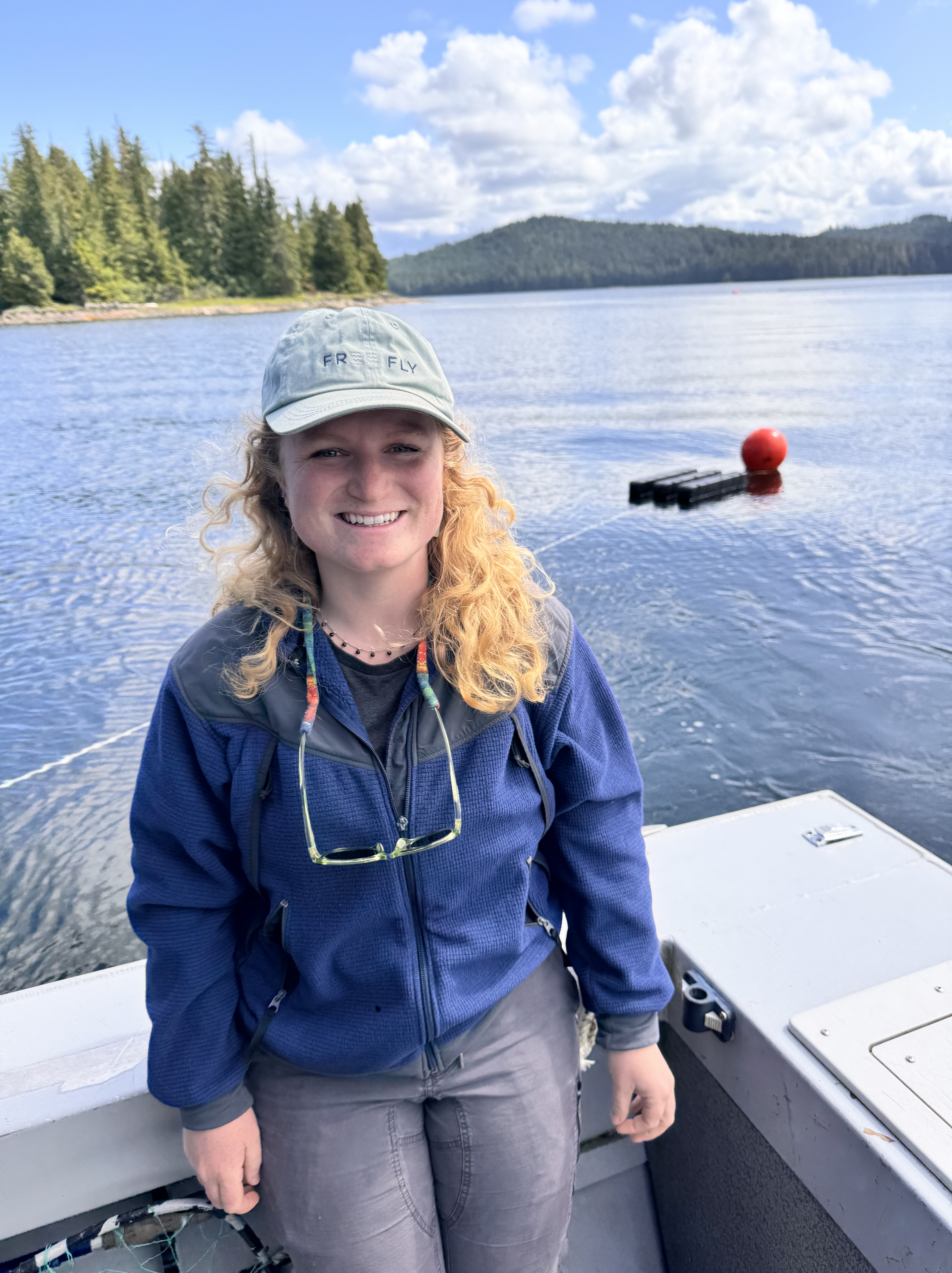
This project is hosted by OceansAlaska and funded by the Alaska Fisheries Development Foundation. This work could not have been accomplished without support from the farmers, UAF committee members, and project team.
 Blue Starr Oyster Co.
Leave a comment